Accessibility and cost reduction
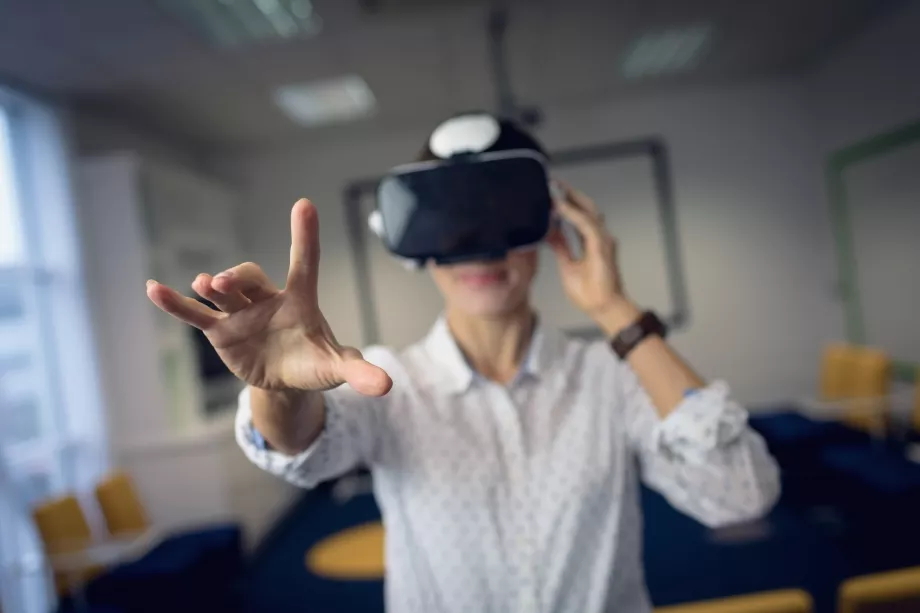
One of the most striking aspects for companies is the reduction in costs and downtime achieved through the implementation of XR technologies. In recent years, the cost of the necessary hardware has drastically decreased, making the initial investment much more accessible for small businesses. Additionally, the development of more affordable and easy-to-integrate software platforms, like the solutions offered by ARSOFT, allows any company, regardless of size, to create customized XR experiences without needing large development teams or technological infrastructures.
An example is EyeFlow, the XR content creation platform developed by ARSOFT. This tool enables the conversion of paper and PDF manuals into interactive 3D manuals, opening new opportunities for businesses that previously couldn’t afford to digitize their processes.
Impact on SMEs
The democratization of XR has significantly impacted small and medium-sized enterprises (SMEs). In sectors such as education, manufacturing, and healthcare, SMEs are using Augmented and Virtual Reality solutions to enhance employee training, optimize production, and improve customer service. According to PwC, 60% of small businesses that implemented XR technologies in their processes experienced a significant improvement in operational efficiency, highlighting how even smaller companies can reap tangible benefits from these technologies.
As XR technologies continue to mature, the democratization of their use will become even more evident. Costs will continue to decrease, and development tools will become more accessible, enabling more businesses to integrate XR solutions into their operations. With the expansion of 5G infrastructure and the continuous advancement of cloud computing, companies will be able to access XR solutions without needing substantial investments in their infrastructure.
In the future, the integration of XR will become increasingly seamless and natural, with businesses not only adopting these technologies but also utilizing them comprehensively to transform their entire operations. The key for companies will be to quickly adapt to these technological changes, adopting solutions like those from ARSOFT that allow them to harness the potential of XR without traditional barriers.
Conclusion
The improved and greater access to XR technologies is undoubtedly changing the business landscape, with companies like ARSOFT playing a crucial role in this process by providing accessible and affordable solutions for SMEs and large corporations to deploy these technologies in their businesses.
The reduction in costs, increased accessibility, and clear benefits in terms of efficiency and ROI are driving more businesses to embrace Virtual Reality, Augmented Reality, and Mixed Reality in their operations. Therefore, the future of businesses will be increasingly digital, efficient, and, above all, competitive. Companies that adapt now will be better positioned to leverage the potential of these technologies, ensuring their relevance and success in a rapidly digitizing global market