Digital transformation in companies is no longer just about automating processes or migrating data to the cloud. More and more organizations are facing the same challenge: how to understand, manage, and execute complex tasks in increasingly demanding environments. In this context, Extended Reality (XR) has moved beyond being a “future” technology to become a truly strategic tool.
When we talk about extended reality in the enterprise, we are referring to a new way of interacting with information. A more visual and intuitive approach, and above all, one that is better aligned with how people learn and make decisions.
What is extended reality (XR) and why does it matter to businesses?
Extended Reality (XR) is the umbrella term that encompasses different immersive technologies that combine the physical and digital worlds. Its value does not lie in how spectacular it may seem, but in its ability to translate complex information into experiences that are easy to understand.
In the business environment, XR addresses very specific needs: training professionals in less time, reducing operational errors, facilitating knowledge transfer, or enabling teams located in different places to collaborate effectively. It is not about replacing existing tools, but about enhancing them.
Augmented, Virtual, and Mixed Reality
Although they are often mentioned together, each technology plays a distinct role within the enterprise:
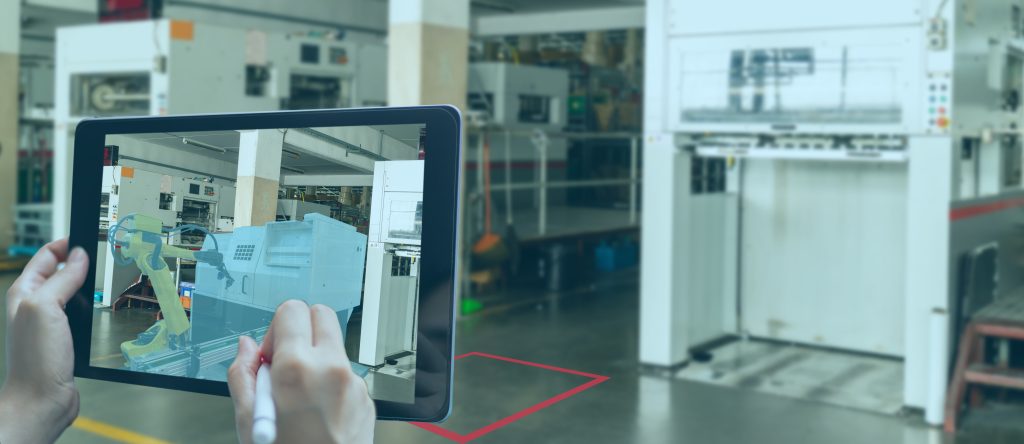
Augmented Reality (AR): overlays digital information onto the real environment. It is especially useful for maintenance, inspection, or remote assistance tasks, where operators need to keep seeing the physical world while receiving clear, contextualized visual instructions.

Virtual Reality (VR): creates fully digital environments. In business settings, it is mainly used for training, simulation, and safe learning scenarios, allowing complex processes to be repeated without risks or operational disruptions.

Mixed Reality (MR): combines the best of both worlds by integrating digital objects that interact with the real environment. Its value lies in scenarios where spatial understanding and advanced interaction are essential.

Understanding these differences is key to applying XR strategically rather than treating it as a generic solution.
Real-world applications of Extended Reality in the enterprise
The adoption of XR in companies is not driven by trends, but by very specific use cases that are already delivering measurable results. Sectors such as industry, healthcare, and defense have been pioneers, but the potential is clearly cross-sector.
Training, Operations, and Knowledge Transfer
One of the areas where XR is having the greatest impact is professional training. Companies are facing increasing talent turnover and ever more complex processes. Traditional training, based on manuals or theoretical sessions, is not always enough.
Extended Reality enables learning by doing: visualizing procedures in 3D, interacting with virtual models, or receiving step-by-step instructions directly in the work environment. This results in higher knowledge retention, fewer errors, and faster onboarding of new professionals.
In operations, XR supports tasks such as guided maintenance, inspection, or remote assistance, reducing intervention times and reliance on highly specialized on-site personnel.
Advanced visualization and decision-making
Another major value of XR in the enterprise is its ability to improve decision-making. By transforming complex data, plans, or images into interactive three-dimensional models, teams can analyze situations more clearly and anticipate potential issues.
This is especially relevant in critical environments, where misinterpreting information can have significant consequences. XR provides context, depth, and spatial understanding—three key elements for better decision-making.
Extended reality in the enterprise is no longer a promise of the future. It is a mature technology that is helping organizations become more efficient, safer, and more competitive. The key is not adopting XR for its own sake, but integrating it thoughtfully, aligned with processes and people.
And that is precisely where XR proves its true value: when it stops being just technology and becomes a strategic advantage.